
Ignore the noise: the numbers behind Arsenal’s title run
Arsenal’s title push isn’t narrative or momentum. The data shows a team built on control, elite defensive numbers and strong chance creation.
ANALYSIS
Arsenal Footy Hub
3/9/20263 min read
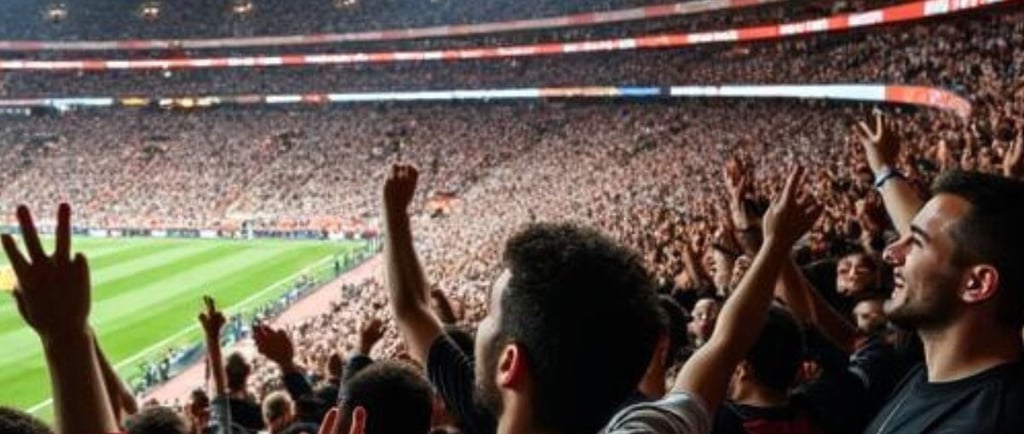
Arsenal are in a title race on merit.
Not because of narrative. Not because of momentum.
Because of the numbers and the structure behind them.
As the run-in begins, the smartest thing supporters can do is simple: ignore the noise and trust what the performances are showing every week.
Why the style is under attack
Criticism of Arsenal’s style hasn’t appeared by accident. It has arrived during a season where the team’s numbers look like those of a genuine title contender.
Arsenal combine strong results with underlying control. They dominate possession, create a high volume of shots and restrict opponents to very few clear chances.
To some observers that structure looks “rigid”. In reality it’s the opposite. It’s a team that refuses to give games away.
The process is simple: control territory, limit risk and win matches through consistency rather than chaos.
Lean into what already works
At this stage of the season Arsenal do not need reinvention. They need reinforcement.
The team averages close to two goals per match while conceding well under one. Underlying metrics tell the same story: roughly 1.7 expected goals created per game and under 1.0 expected goals conceded.
That balance is the definition of an elite process.
Over a long season, teams that consistently create higher-quality chances while limiting opponents tend to finish at the top of the table. Arsenal’s numbers place them firmly in that category.
Calls for “more chaos” ignore the reason Arsenal are in this position in the first place.
Eze bringing something different
Eberechi Eze has added a different dimension to that structure.
Where Arsenal’s system is built on positional control, Eze offers unpredictability. His ability to carry the ball through pressure, draw fouls and break compact shapes provides a release valve when games tighten.
Run-ins rarely feature open football. They feature nervous matches, compact blocks and moments decided by individual quality.
Players who can create separation in tight spaces become invaluable in that environment.
Defensive depth matters
At the other end of the pitch, squad depth is proving just as important.
When Piero Hincapié steps in, Arsenal’s defensive baseline remains extremely strong. His profile — aggressive in duels, comfortable defending wide spaces — fits naturally into a high defensive line.
That matters in a title run-in. Injuries and rotation are inevitable. The teams that survive them are the ones whose defensive structure holds regardless of personnel.
The return of academy depth
Max Dowman’s return is symbolically important.
He represents the next stage of Arsenal’s youth pipeline feeding into a first team that already dominates possession and territory. The integration of academy players during a title push suggests a club that trusts its system rather than panicking under pressure.
It is a sign of stability, not desperation.
Missing Ødegaard’s control
There is no doubt Martin Ødegaard brings calmness to Arsenal’s attacking structure.
His ability to dictate tempo and deliver the final pass remains central to how the team sustains pressure in the opponent’s half.
But the key point is that Arsenal’s underlying dominance does not collapse when he is absent. Possession levels, chance creation and defensive control remain strong.
That indicates a robust system — one that Ødegaard elevates rather than one that depends entirely on him.
The “slow restart” myth
One of the lazier criticisms surrounding Arsenal is that the team lacks urgency or struggles to respond in matches.
The scoring patterns suggest the opposite.
Arsenal score a large share of their goals after half-time while conceding very little in the second half. The team tends to build pressure as games progress rather than fade.
That is exactly what you expect from a side built on control and territorial dominance.
The “worst champions” narrative
The idea that Arsenal would be “the worst champions” is not rooted in evidence.
Teams with strong goal difference, elite defensive numbers and a positive expected-goals balance almost always sit at the top of the table for a reason.
Arsenal combine a highly efficient defence with an attack that consistently generates close to two goals’ worth of chances per match.
That profile is not unusual for a champion.
If anything, it is exactly what champions normally look like.
Gabriel anchoring the defence
Gabriel Magalhães remains central to that platform.
His aerial dominance, aggression in duels and comfort defending high up the pitch allow Arsenal to compress games into the opponent’s half.
When defenders consistently win their one-v-one battles, the entire structure works: the midfield can stay aggressive and the forward line can press higher.
Arsenal’s defensive stability begins there.
Why the noise should be ignored
When you step back and look at the whole picture, the evidence is clear.
Arsenal have:
• one of the strongest defensive records in the league
• a positive expected-goals balance among the best in Europe
• a consistent attacking output close to two goals per match
• squad depth that allows rotation without structural collapse
That is the profile of a serious title contender.
The noise will not disappear. Rival supporters will create narratives. Pundits will debate aesthetics.
But the numbers remain the most reliable guide.
And right now, the numbers say Arsenal are exactly where they deserve to be.
Arsenal Footy Hub
Long-form writing on Arsenal, youth development, and the structures behind modern football.