
Arsenal 3–0 Sunderland: control, clean sheet, and a title statement
Arsenal’s 3–0 win over Sunderland was a controlled, disciplined performance built for a title race, combining defensive solidity with late ruthlessness.
ANALYSIS
Arsenal Footy Hub
2/10/20263 min read
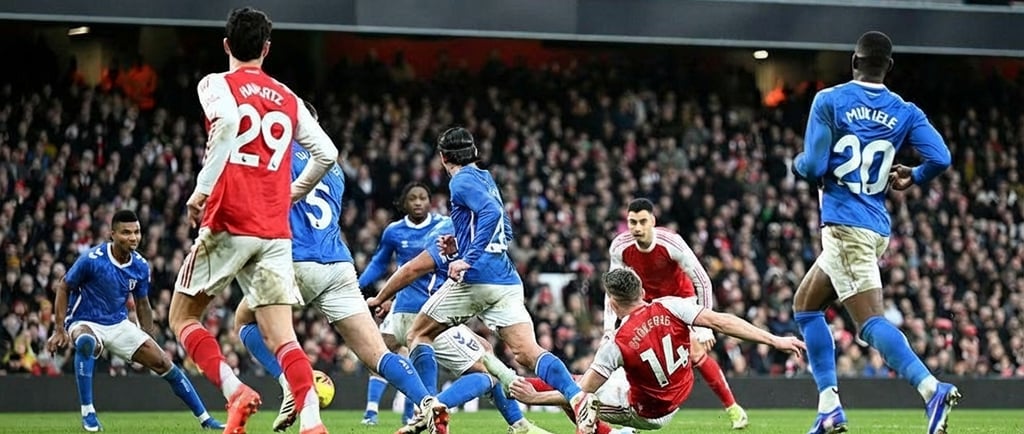
Arsenal’s 3–0 win over Sunderland at the Emirates was exactly what a team in a title race needs. Calm. Controlled. Decisive when the moments arrived. Manchester City’s win later in the weekend kept the pressure on, but Arsenal had already done their part — and done it properly.
A simple shape that worked
Arsenal lined up in a clear 4-4-2 and used it to dominate without ever looking stretched. Out of possession, the front two worked as a pair, blocking central access and guiding Sunderland wide, where Arsenal were comfortable defending crosses rather than through balls.
The wide midfielders stayed narrow, then pressed aggressively once play was locked to one side. It made Sunderland predictable and limited their ability to build any rhythm.
With the ball, the shape loosened. One striker regularly dropped between the lines to link play, turning the system into something closer to a 4-2-3-1 at times, while the other stayed high to stretch the defence. The balance was right: control in midfield, threat in behind, and long spells spent in Sunderland’s half.
Defensive control and game management
What stood out most was how solid Arsenal looked. Sunderland have been one of the league’s surprise packages, but they were kept at arm’s length throughout.
Arsenal protected their back four well, kept compact distances between the lines, and ensured they always had numbers behind the ball when moves broke down. Even after the break, when Sunderland pushed and forced David Raya into a save from Chemsdine Talbi, there was no sense of panic.
Instead, Arsenal slowed the game, recycled possession, and waited for the next opening — exactly the kind of game management that has sometimes been missing in previous seasons.
Saliba v Brobbey: control at the back
One of the key battles was William Saliba against Brian Brobbey. Sunderland tried to use Brobbey as a focal point, playing into him early and asking him to hold the ball up or spin into space.
Saliba handled it superbly. He stayed tight without overcommitting, won his duels, and rarely allowed Brobbey to turn and face goal. When Sunderland went direct, Saliba attacked the first ball and Arsenal squeezed up around him to deal with the second. By winning that matchup, Arsenal cut off one of Sunderland’s main attacking outlets.
Gyökeres changes the game
In attack, the focus was on Kai Havertz and Viktor Gyökeres. Havertz started and played his part, finding good positions and helping Arsenal connect play around the box.
The breakthrough came just before half-time when Martín Zubimendi smashed in a superb long-range strike to make it 1–0.
Gyökeres’ introduction on the hour changed the tone. His first goal came from classic centre-forward play: Sunderland failed to clear, Leandro Trossard found the channel, Havertz released Gyökeres with a sharp one-touch pass, and the finish was emphatic.
Deep into stoppage time, Gabriel Martinelli broke away and squared for Gyökeres to tap in his second and Arsenal’s third. Four goals in four games now, and a sense that his first season in north London is beginning to find momentum.
Subs that finished the job
Arteta’s substitutions helped Arsenal both tighten up and stay dangerous. Gyökeres added power and direct running, while later changes kept the energy high and allowed Arsenal to continue pressing and countering even with the result secure.
Sunderland’s late changes didn’t shift the momentum. By then, Arsenal were too organised and too comfortable.
By full-time, it felt like the ideal afternoon: a clean sheet, a controlled 3–0 win, a decisive impact from the bench, and a performance that quietly reinforced Arsenal’s title credentials — regardless of what City did next.
Arsenal Footy Hub
Long-form writing on Arsenal, youth development, and the structures behind modern football.