
Australian youth football development: a pathway that looks clearer than it is
Australia’s youth football pathway looks structured on paper. In reality, geography, cost, and early selection shape outcomes more than talent. A look at where the system breaks—and why.
YOUTH& DEVELOPMENT
Arsenal Footy Hub
1/16/20263 min read
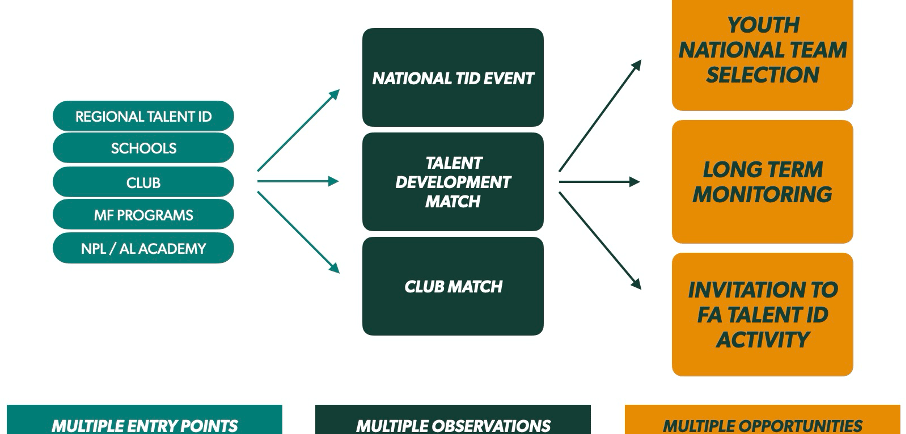
Australia likes to talk about its youth football pathway as if it’s settled. Community football feeds into academies, academies feed into the A-League, and the best eventually reach the national teams. On paper, it makes sense.
In practice, far too much still depends on where you live, what you can afford, and how early you’re noticed. Talent matters, of course—but it’s rarely the deciding factor on its own.
Football Australia’s National Curriculum continues to provide the foundation for how youth football is meant to be delivered. The early years are focused on enjoyment and basic skills. The middle phases emphasise technique and decision-making through small-sided games. Later stages introduce tactical structure, physical demands, and elite competition. It’s a long-term model influenced by successful systems overseas, and, in theory, it remains sound.
The problem isn’t the idea. It’s everything that happens once the idea leaves the document.
Where the system breaks down
Football Australia sets the direction, but delivery is split across state federations, A-League clubs, NPL academies, and community organisations. The result is uneven. Some academies are well resourced, aligned to the curriculum, and staffed by experienced coaches. Others rely heavily on volunteers, limited facilities, and inconsistent support.
Geography plays a bigger role than most want to admit. A player growing up in western Sydney or inner Melbourne will have access to multiple NPL clubs, private academies, and visible scouting pathways. A player of the same ability in regional Victoria or northern NSW technically follows the same curriculum but experiences a very different reality—longer travel, fewer sessions, and fewer chances to be seen.
Cost remains the other quiet filter. SAP and NPL programs commonly run into the thousands per year once fees, travel, and equipment are factored in. By the time families are making those decisions between ages 10 and 13, development has already become a financial choice as much as a football one. Many capable players step away not because they’ve been released, but because the pathway becomes unsustainable.
Development in theory, selection in practice
Australian football talks about development but still operates selection.
From relatively young ages, results begin to matter. Coaches are judged on league tables. Clubs feel pressure to justify programs. Physical maturity becomes an advantage that’s rewarded early, while technical or late-developing players are asked to wait—or quietly drift out.
This tension shows up every season. Players who dominate junior competitions at 13 or 14 often do so through size and strength rather than long-term attributes. Others, smaller or later to mature, struggle for minutes despite strong technical foundations. Many are lost before the system ever catches up with them.
The curriculum promotes patience, problem-solving, and risk. The competition environment often discourages all three.
The hardest jump
Even for players who survive the youth system, the step into senior football remains the biggest challenge.
The gap between NPL and A-League football is still significant, and opportunities for consistent senior minutes remain limited. Each season produces examples of highly regarded youth players who perform well at the NPL level but struggle to find a stable role beyond it. Some move sideways within the NPL system. Others step away from the professional game altogether.
There has been progress. A-League clubs are handing more debuts to young players, and Football Australia’s recently introduced Talent Development Scheme reflects a growing recognition that talent identification and development need to be more consistent nationally. But the transition remains fragile. Without clearer bridges and sustained opportunity, development still stalls at the point it should matter most.
What actually needs to change
This doesn’t require reinventing Australian football. It requires alignment.
Reducing financial barriers matters more than refining language in policy documents. Improving coaching consistency at junior levels matters more than expanding talent ID days. Protecting late developers and strengthening the pathway into senior football matters more than youth league results.
Recent initiatives focused on early-age fundamentals and updated junior resources are steps in the right direction. But until access, selection pressure, and the youth-to-senior transition are addressed together, the system will continue to filter talent rather than grow it.
Australia doesn’t lack footballers.
It lacks a pathway that keeps enough of them long enough to find out what they could become.
Arsenal Footy Hub
Long-form writing on Arsenal, youth development, and the structures behind modern football.